How To Overcome that Horrible Morning Sickness
If the smell of your own toothpaste makes you want to gag and crackers are your new best friend, you’re not alone. Morning sickness can be a real challenge for many pregnant women. It turns even the simplest parts of the day into a struggle.
I am going to share some practical tips that have helped thousands of moms-to-be, including myself, get through this tough time. This article will give you an overview of the top strategies to help alleviate morning sickness. You’ll learn about dietary changes and other effective relief methods.
Nothing about handling pregnancy is “easy”. By the end of this article, you’ll have a better understanding of how to feel a little more like a human again and manage your morning sickness symptoms.
Understanding Morning Sickness: What Causes It
Learning about morning sickness can help you cope with it. While it is a common symptom in pregnancy, it affects each mom-to-be differently. The exact reason for morning sickness is still a mystery, however, it’s thought to be related to hormonal changes. These changes, especially in human chorionic gonadotropin (hCG) and estrogen, can upset the stomach.
Common Symptoms and Timeframes
Morning sickness usually starts between the 4th to 6th week of pregnancy, usually around the time most women find out they are pregnant. It can last until the end of the first trimester, usually 12th to 14th week. I got lucky and my morning sickness was only sensitivity to smell and some dizziness if I didn’t eat every couple hours. Some women unfortunately have it all through their pregnancy. Symptoms include:
- Nausea and vomiting
- Food aversions
- Sensitivity to smells
- Dizziness
Differentiating Normal Morning Sickness from Hyperemesis Gravidarum
Morning sickness is 100% normal in pregnancy. Hyperemesis Gravidarum is a much more serious condition. It involves severe vomiting, dehydration, and weight loss. If you’re experiencing these symptoms, see your doctor right away.
Effective Morning Sickness Relief Strategies
There are ways to feel better when you have morning sickness. Making a few simple changes in your life can help a lot. These changes can make you feel just a little less miserable for the duration of your morning sickness.
Timing Your Meals for Maximum Comfort
Eating small meals every couple hours can keep your blood sugar steady and cut down on nausea. Go for bland, easy-to-digest foods like crackers, toast, or plain rice. Think “BRAT” diet (bananas, rice, applesauce, toast). Stay away from heavy or spicy foods that can make nausea worse.
- Choose snacks that are high in protein and low in fat.
- Keep morning sickness snacks handy, such as nuts or dried fruits.
- Avoid eating too much at one time.
Hydration Techniques That Prevent Nausea
Drinking lots of water is key when you’re feeling sick in the morning. Drink water, clear broths, or electrolyte-rich drinks like coconut water or sports drinks. Drinking fluids all day can stop dehydration. This may worsen your already annoying urge to pee every half hour, but hydration is most important!

Rest and Stress Management Approaches
Getting enough sleep and managing stress are important for beating morning sickness. Feeling tired can make nausea worse. So, make sure to sleep well and take breaks during the day. I know it’s hard to do this when you have other littles running around but if you are in a place where you can ask for help from friends and/or family, do it!
Creating a Restful Environment
Make your bedroom cool, dark, and quiet for better sleep. Use a noise machine (I use brown or green noise, not white noise) and blackout curtains if needed.
Stress-Reduction Techniques
- Practice deep breathing exercises or meditation.
- Engage in gentle prenatal yoga or stretching (these can also help with labor and delivery, always a good idea!).
- Listen to calming music or nature sounds.
- Going on walks.
Best Foods and Snacks for Overcoming Morning Sickness
When you’re dealing with morning sickness, the right foods can really help. Choosing the right diet can ease symptoms and make pregnancy easier.
Bland, Easy-to-Digest Options
Simple carbohydrates like crackers and toast are gentle on your stomach. They also help keep your blood sugar stable. Keeping crackers by your bed can be really helpful. Eating a few before getting up can stop morning nausea. Bland foods are good because they don’t usually make nausea worse. Try:
- Plain crackers
- Toast
- Plain rice
- Bananas
- Applesauce
Cold Foods That May Be Easier to Tolerate
Cold foods have less smell, which is good when you’re feeling sick. Try:
- Yogurt
- Cold fruit
- Smoothies
Protein-Rich Morning Sickness Snacks
Protein-rich foods can keep you full and satisfied, which might help reduce nausea. Good choices include:
- Nuts and nut butters: almonds, cashews, natural peanut butter
- Plain yogurts: plain yogurts with less sugars/flavors (use honey or real maple syrup to sweeten)
- Hard boiled eggs: if they don’t gross you out, eggs are a great source of healthy protein and fat
Hydrating Foods to Combat Nausea
Staying hydrated is key, especially when you’re feeling sick in the morning. I have had friends that even water was hard to keep down sometimes. Luckily, there are some great food options to aid in hydration! These include:
- Watermelon
- Cantaloupe
- Cucumbers
- Clear broths (bone, beef, or chicken broth)
These help keep your fluids balanced and provide important electrolytes.
Foods to Avoid When Experiencing Morning Sickness
Some foods can make morning sickness worse. These foods may also cause bouts of heartburn throughout your pregnancy. It’s best to steer clear of:
- Fatty or greasy foods
- Spicy foods
- Foods with strong odors
- Caffeine and carbonated drinks
Avoiding these can help reduce nausea and make your pregnancy more comfortable.
Natural Remedies for Morning Sickness Relief
Many pregnant women turn to natural remedies for morning sickness. These options are gentle and effective, avoiding the need for medication.
Ginger and Lemon Based Solutions
Ginger and lemon are known for fighting nausea, and studies back its effectiveness against morning sickness. They reduce stomach inflammation and aids digestion.
Ginger Tea and Beverages
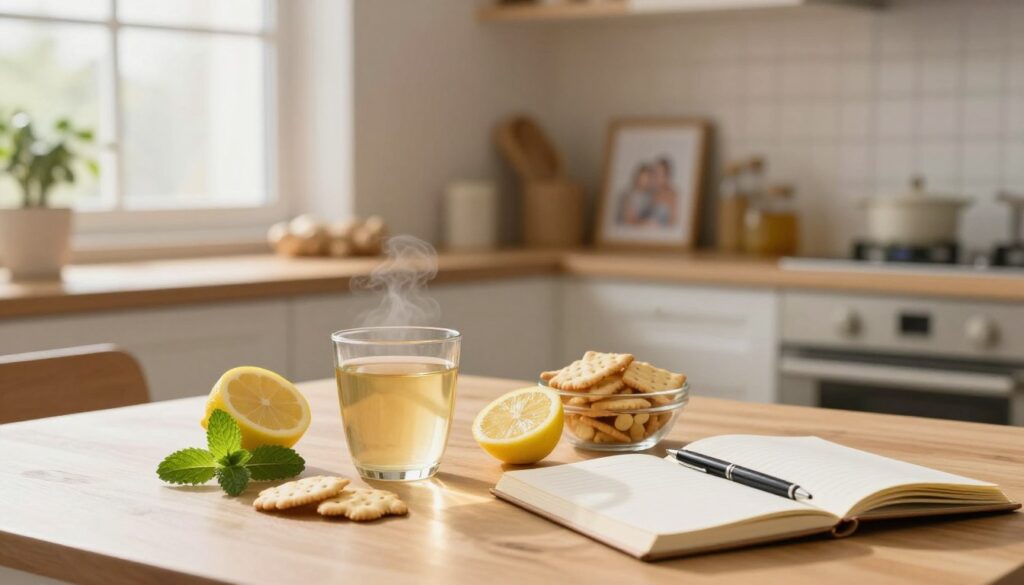
Ginger tea is a comforting choice for pregnant women. You can make it with fresh ginger or buy ginger tea bags. I would always boil fresh ginger root and lemon slices in water and add some honey to sweeten it. It is still very bitter so it is for sure an acquired taste! Ginger ale or ginger beer can also help, but pick ones with real ginger and little sugar. I’m not a soda gal, but if I ever did feel like one, I looked for the drinks with cane sugar.
Candies and Supplements
Ginger candies are handy for fighting morning sickness on the move. Choose ones with real ginger and little sugar. I liked ginger chews and lemon drops. I always had a little stash of each in my bedside table, my car, and my purse. Ginger supplements might work better for some, but as always, consult your doctor first.
Aromatherapy Options
Aromatherapy uses essential oils to improve well-being. As a massage therapist, we swear by aromatherapy. I’m going to get a little science-y on you, bear with me. I find it fascinating how smell can contribute to your whole mood and your emotions! If that’s not interesting to you, feel free to skip to the next paragraph.
Aromatherapy works by which stimulating olfactory (smell) receptors in the nose. Those receptors send signals to the brain’s limbic system which is responsible for things like memory and emotions. The signals are also sent to the hypothalamus, responsible for mood and hormonal changes. Scents like peppermint, lavender, and lemon can help with nausea. Use a diffuser or a cloth with a few drops of oil to inhale the benefits.
Vitamin B6 and Other Helpful Supplements
Vitamin B6 supplements can lessen morning sickness for some. Foods like bananas, potatoes, and chicken are also good sources. Vitamin B12 and magnesium might help too, but always check with your doctor first.
Figure out what works for you! It could be some of these or it could be none of them. Try a couple and do whatever you need to to make pregnancy a little easier for you!
Creating Your Personal Morning Sickness Management Plan
Now that you’ve learned many ways to ease morning sickness, it’s time to make a plan just for you. There is no “one size fits all” when it comes to pregnancies. Mix strategies like eating at the right times, drinking plenty of water, and using ginger. This way, you can handle your symptoms better.
Be patient and try different things to find what helps you most. Maybe it’s eating protein snacks or managing stress. Taylor your plan to fit your needs perfectly.
FAQ
What are some effective morning sickness relief strategies?
Try eating at times when you feel best. Use hydration to prevent nausea. Also, manage stress and rest well.
Consider ginger-based solutions and acupressure wristbands as natural remedies.
Are there specific foods that can help alleviate morning sickness?
Yes, bland foods like crackers and toast are good. Simple carbs and protein-rich snacks like nuts and yogurt help too.
Hydrating foods can also fight nausea.
How can I manage morning sickness when I’m not feeling well enough to eat a full meal?
Have small meals or snacks all day. Choose cold foods or simple carbs. Avoid foods that make nausea worse.
Can natural remedies really help with morning sickness relief?
Yes, many women find ginger tea and acupressure wristbands helpful. Aromatherapy and Vitamin B6 supplements can also ease symptoms.
But always talk to your doctor before trying new supplements.
When should I consult my healthcare provider about my morning sickness?
If your morning sickness is very bad or lasts a long time, see your doctor. They can offer support and advice.
They can also help find the best way to manage your symptoms.
Are there any specific foods I should avoid when experiencing morning sickness?
Yes, stay away from fatty, spicy, or acidic foods. They can make nausea worse. Also, limit caffeinated drinks and foods with strong smells.